


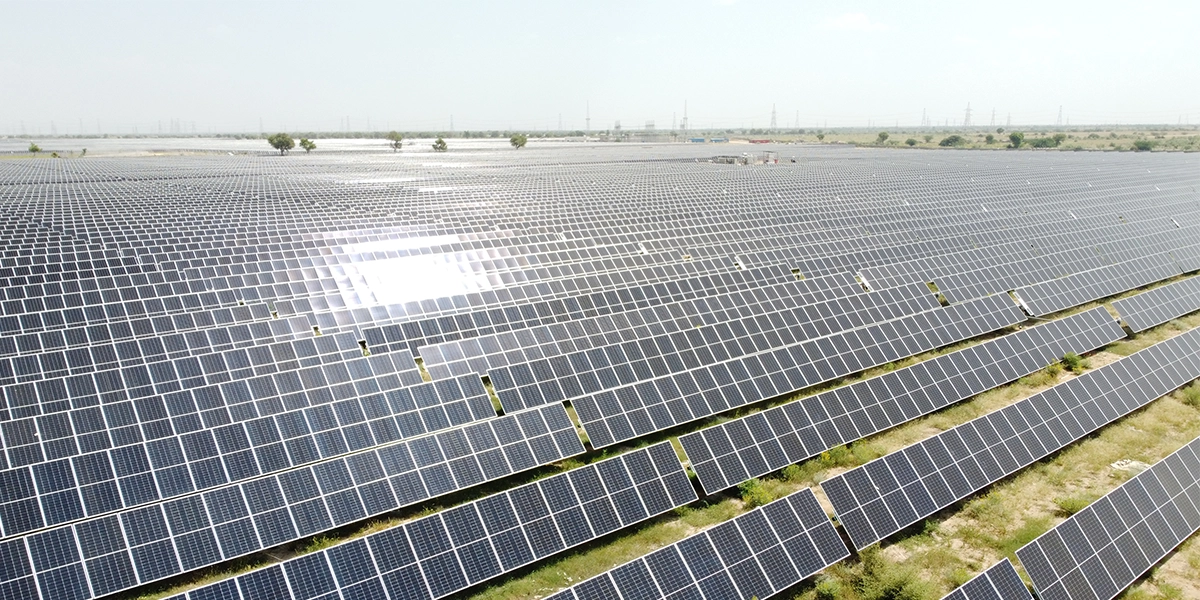
ISTS (Inter-State Transmission System) is India’s centrally coordinated high-voltage network that carries electricity across state boundaries. It enables generators in one state to supply power to buyers in another, using centrally scheduled access, uniform procedures for scheduling and metering, and Point-of-Connection (PoC) charge allocation. In short, ISTS connects resource-rich generation sites to demand centres across the country, unlocking a national power market.
India’s ISTS has shifted from a transmission backbone to a strategic enabler of new business models in power procurement and generation. Recent regulatory and policy changes, coupled with evolving market instruments, are accelerating the off-take of power through ISTS.
Below is a practical look at the benefits of choosing ISTS power for both consumers and developers, and why the shift matters.
1. Increased government focus and regulatory clarity. The government has taken several decisive steps that make ISTS routes more attractive today:
- ISTS transmission charges waiver: Projects commissioned until June 2025 have been offered a waiver of ISTS transmission charges for 25 years, after which a staggered approach to levying charges is expected. This financial incentive reduces landed cost and encourages developers to connect projects to the interstate grid, increasing physical off-take through ISTS.
- GNA rules: The General Network Access (GNA) framework provides a structured mechanism for obtaining transmission access rights through the ISTS. GNA standardizes allocation procedures, clarifies entitlements for different types of access (long-term, medium-term, short-term), and establishes how PoC charges and losses are apportioned. The GNA rules have reduced ambiguity around how market participants secure and exercise interstate access, improving planning certainty for both buyers and sellers.
- Central verification of captive/group-captive status: The Central Electricity Authority (CEA) had issued rules to verify captive and group-captive status through a central regulatory process in January 2025. Centralized verification removes the need to rely on multiple state DISCOMs, which often have varying and unclear verification procedure’s and creates more predictable, transparent eligibility checks for consumers claiming captive or group-captive benefits.
2. Broader access to the market ISTS opens up nationwide market opportunities:
- For consumers: ISTS gives procurers access to generators across India, including low-cost resource regions. For example, through the ISTS project, a consumer located in states without any wind potential, i.e., Uttar Pradesh, Haryana, or Odisha, can get Round Clock Renewable Energy at very competitive prices. Further, a larger supplier base increases competition and the chance of securing lower tariffs compared with being limited to state utilities or intra-state projects.
- For developers: Generators can offer electricity beyond their home state to a much larger pool of buyers. Wider offtake options improve revenue prospects, support merchant strategies, and increase the likelihood of securing PPAs at attractive prices. Lastly, since ISTS projects are connected at the CTU level for 220kV or higher, it brings business scalability, reliable evacuation infra, structure, and optimized costs for the flow of electricity.
3. One developer, one contract for multi-state needs:
One of ISTS’s practical advantages for multi-state consumers is administrative simplicity:
- Consumers operating in multiple states can sign with a single, reputable developer under one contract structure, rather than managing separate projects and contracts in each state. This simplifies procurement, credit assessments, and contract management.
4. Higher generation potential and lower LCOE ISTS let developers site projects where resource quality is best:
- Developers can build projects in high-CUF (capacity utilization factor) regions for example, solar in Rajasthan or wind in Andhra Pradesh, which reduces the levelized cost of energy (LCOE) and meets the clock electricity requirements of the Consumers. Lower LCOE can translate into lower bus-bar tariffs for the consumer and higher returns on investment for the developer because the same capital produces more energy in resource-rich locations.
5. Multiple contract structures are possible ISTS expands contracting options far beyond the traditional bilateral PPA:
- Market participants can choose merchant sales, trading PPAs, medium-term contracts, VPPAs, or physical long-term PPAs, depending on risk appetite. This spectrum of options allows both developers and buyers to optimize revenue and cost exposure across price and volume risk profiles.
6. Economies of scale Large ISTS projects often deliver cost advantages:
- Projects built for interstate evacuation are typically larger than intrastate installations. Developers can exploit economies of scale in construction, procurement, and operations; if competitive pressures allow, these savings may be passed to consumers in the form of lower tariffs.
7. Better absorption for renewables:
ISTS helps match renewable supply with demand nodes that lack local renewable potential.
- Many renewable resource areas are located in states with limited local demand. ISTS enables those resource-rich regions to export clean energy to demand centres, including the eastern and northeastern states, where land and irradiation constraints limit renewable deployment. The result is more efficient national utilization of renewable resources.
8. Improved bankability for merchant PPAs:
Lenders are increasingly willing to finance merchant and hybrid models:
- The growing depth of exchange liquidity, clearer regulatory regimes, and the ability to blend revenue streams (merchant sales + ancillary services + trading) have nudged banks and project financiers to fund merchant PPAs. This improves developers’ ability to invest based on market participation rather than depend entirely on long-term contracted offtake.
Practical considerations and caveats. While the ISTS route offers many benefits, parties should consider a few operational and commercial points:
- PoC charges and transmission losses: These are real cash items that affect the landed power price and vary by project location and load centre.
- Scheduling, forecasting, and deviation costs: Especially for renewables, developers need robust forecasting and scheduling capabilities to manage imbalance charges.
- Curtailment and congestion risk: Transmission constraints can cause curtailment under certain circumstances; allocations and priority rules matter.
- Regulatory complexity: Interstate contracts involve central rules, RLDC coordination, and standardized procedures that require careful contract drafting and compliance. Furthermore, the entire process of captive verification and approvals shall be more cumbersome than an intra-state project.
Conclusion
ISTS has evolved into a strategic pathway for unlocking low cost generation, enabling scale, and supporting innovative contracting models such as VPPAs. For consumers, it means access to a nationwide supply base, simplified contracting for multi state operations, and the ability to meet sustainability goals more flexibly. For developers, ISTS opens larger markets, better resource siting, scale economics, and expanding financing options — including for merchant projects.


AMPIN Editorial
At AMPIN Transition, our editorial team is dedicated to delivering credible, well-researched insights on clean energy, infrastructure, and sustainability. We aim to make complex topics simple and engaging - offering updates, practical tips, and thought leadership that help decision-makers and readers alike stay informed, inspired, and empowered on the journey toward a greener, more sustainable future.