

The way we produce and use energy is changing. Around the world, people are searching for cleaner, safer, and more reliable energy sources that don’t harm the planet. India, with its growing population and fast-moving economy, is no exception. Our energy needs are rising every day, but so are concerns about pollution, climate change, and heavy dependence on imported fossil fuels.
That’s where green hydrogen becomes important for us as a country.
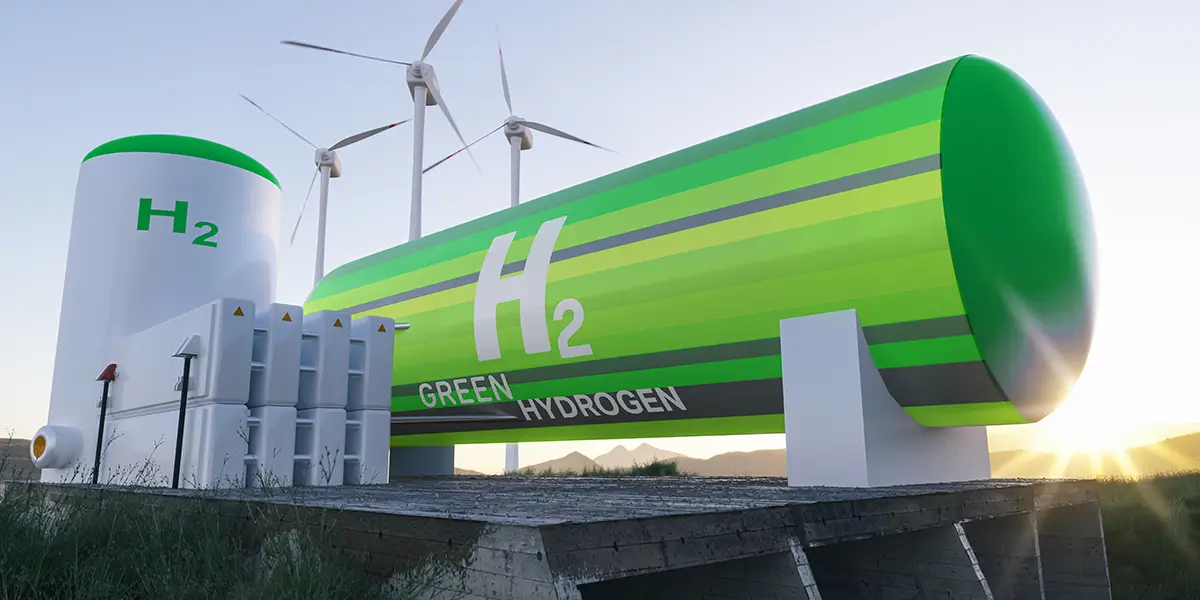
You may have heard the term recently in the news or from energy experts. But what exactly is green hydrogen? Simply put, it’s a clean fuel that produces zero pollution when used. It can help power industries, vehicles, and even homes, all while keeping the air cleaner and reducing our carbon footprint.
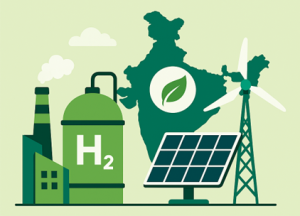
For a country like ours, green hydrogen is a powerful opportunity to reduce emissions, become more energy independent, and lead the world in clean energy solutions.
But what exactly is green hydrogen? And why should India, and Indian businesses, care?
Understanding Green Hydrogen
Hydrogen is the most abundant element in the universe, and when used as a fuel, it emits only water vapour, making it a clean energy source. However, hydrogen doesn’t occur naturally in a pure form. It has to be extracted from compounds like water (H₂O) or fossil fuels.
Depending on how it’s produced, hydrogen gets colour-coded:
- Grey Hydrogen: Made from natural gas or coal, releasing carbon emissions.
- Blue Hydrogen: Also made from fossil fuels, but emissions are captured and stored.
- Green Hydrogen: Made by using electricity from renewable energy sources like solar and wind to split water into hydrogen and oxygen, producing no emissions at all.
Green hydrogen production, therefore, gives out the cleanest form of hydrogen and the most sustainable option for the future.
How Green Hydrogen Is Made: A Quick Technical Breakdown
Green hydrogen might sound futuristic, but the science behind it is surprisingly straightforward.
The core process used to produce green hydrogen is called electrolysis. Here’s how it works:
- Water (H₂O) is split into hydrogen (H₂) and oxygen (O₂) using electricity.
- When that electricity comes from renewable energy sources like solar or wind, the hydrogen produced is called green hydrogen, because it involves zero carbon emissions.
Types of Electrolysers Used
There are mainly two technologies used to carry out this electrolysis:
- PEM (Proton Exchange Membrane) Electrolysers: These are compact, efficient, and ideal for renewable energy systems where power flow is variable. They offer fast response times and are perfect for small to mid-scale decentralised projects.
- Alkaline Electrolysers: This is a well-established technology that uses alkaline solutions (like potassium hydroxide) as the electrolyte. It’s more cost-effective for large-scale hydrogen production and can operate continuously at stable loads.
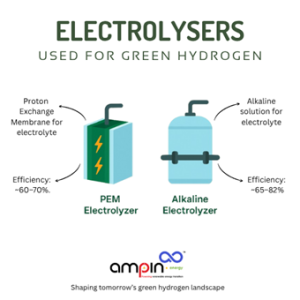
Both these technologies are crucial to scaling up hydrogen use across industries, and choosing the right one depends on the scale, budget, and energy source.
Why Green Hydrogen Matters for India
India is the world’s third-largest emitter of carbon dioxide. It also has a fast-growing economy, increasing demand for energy, and ambitious climate targets, including a pledge to reach net zero emissions by 2070. In this context, green hydrogen renewable energy can play a major role.
Here’s how:
- Reducing Industrial Emissions: Sectors like steel, cement, refining, and fertiliser production are “hard to abate”, meaning they can’t easily shift to electricity-based energy. Green hydrogen offers an alternative fuel for these sectors, helping them cut down on emissions.
- Enhancing Energy Security: Currently, India imports around 85% of its oil and more than half of its gas. Green hydrogen, produced domestically, can reduce dependence on foreign energy.
- Boosting Economic Growth: Investing in green hydrogen could create new industries, generate employment, and position India as a global leader in clean energy innovation.
- Supporting Renewable Energy Growth: The production of green hydrogen requires electricity from renewables. This provides an additional demand sink for India’s expanding solar and wind energy sectors.
India’s Green Hydrogen Mission
Recognising its potential, the Government of India launched the National Green Hydrogen Mission in 2023. With a budget of ₹19,744 crore (~$2.4 billion), the mission aims to:
- Develop a production capacity of 5 million tonnes of green hydrogen per year by 2030.
- Reduce fossil fuel imports.
- Create domestic manufacturing capabilities for electrolysers (the technology used to produce hydrogen from water).
- Make India a global hub for green hydrogen production and export.
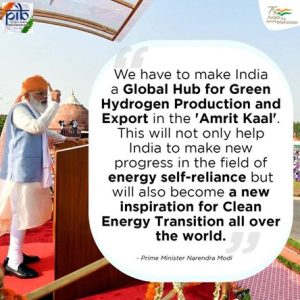
This is a bold step that not only aligns with environmental goals but also opens up economic opportunities for businesses across the country.
AMPIN Energy Transition: Powering the Hydrogen Shift
As India charts its path toward a green hydrogen future, AMPIN Energy Transition is stepping up to contribute.
We are now expanding our mission by foraying into green hydrogen technology, enabling commercial and industrial (C&I) clients to decarbonise more comprehensively.
To bring this vision to life:
- We have partnered with technology pioneers, who manufacture and deploy cutting-edge PEM and Alkaline Electrolysers. These electrolysers are key to efficiently producing green hydrogen from renewable energy.
- We aim to develop On-Site Green Hydrogen Plants with a cumulative capacity of ~750 MW over the next three years.
On Site Green Hydrogen Plants
- Will reduce carbon footprint in terms of transportation of gases, conversion losses (H2-NH3-H2) etc.
- Will reduce dependence on hydrogen transportation and associated costs.
- Will enable sector-specific applications such as refineries, fertilizers, mobility (fuel cell vehicles, heavy-duty transport), steel and other hard-to-abate industries.
- Implementation of such on site GH2 plants are much faster when compared to large sized GH2 plants.
- With this expansion, we are set to offer customers a “One Stop Shop” for Green Energy and Hydrogen, allowing businesses to access solar, wind, and hydrogen solutions seamlessly under one roof.
Enabler for GH2 specially On-Site Green Hydrogen Plants
- Recognition of dedicated VPPA (Virtual Power Project Agreements) for balance green (20% (for ISTS) – 50% (for Intra State with 30% banking)) supply, as GH2 needs 100% RTC supply. No chance of green washing in such VPPAs even if we have any doubt w.r.t sale of RECs/iRECs.
- Statute required for G H2 Plant connected at 415 V (“Deemed OA Consumer”) inside the network of any end user (eg. steel/refinery etc) to avail GEOA and for DISCOM to do billing inside end user’s campus.
- Nil Import Duty and 5% GST for all the GH2 equipment.
- ISTS is getting more congested. STU based plants needs to be enabled. 100% Monthly Banking and actual implementations of waivers (states who have already come out with policy) in intra state Open Access Charges exclusively only for On Site G H2 plants will be helpful in reducing power cost.
- Recognizing GH2 as a priority lending sector (< Rs. 30 cr. like RE) keeping energy decarbonization goal in consideration.
- Mandate minimum green hydrogen uses in key sectors (e.g., refining, fertilizers, steel, glass, chemicals) and provide some consumption-linked incentives especially for C&I consumers.
What It Means for Indian Businesses
For Indian companies looking to meet ESG targets, reduce energy costs, or gain a competitive edge, green hydrogen will soon become a strategic investment in the future. By partnering with us, businesses can:
- Secure clean energy for their operations.
- Prepare for future regulations around emissions.
- Build a sustainability-focused brand identity.
- Lead the shift towards a low-carbon economy.
A Greener Future Begins Now
The journey to green hydrogen is not without its challenges, from costs to technology maturity, but the momentum is building fast. With government support, technological innovation, and proactive participation from companies like AMPIN Energy Transition, India is poised to become a major force in the global green hydrogen economy.
Green hydrogen matters, for the planet, for India, and for every business that wants to be part of the solution. The future is clean, and it will soon be powered by green hydrogen.


AMPIN Editorial
At AMPIN Transition, our editorial team is dedicated to delivering credible, well-researched insights on clean energy, infrastructure, and sustainability. We aim to make complex topics simple and engaging - offering updates, practical tips, and thought leadership that help decision-makers and readers alike stay informed, inspired, and empowered on the journey toward a greener, more sustainable future.